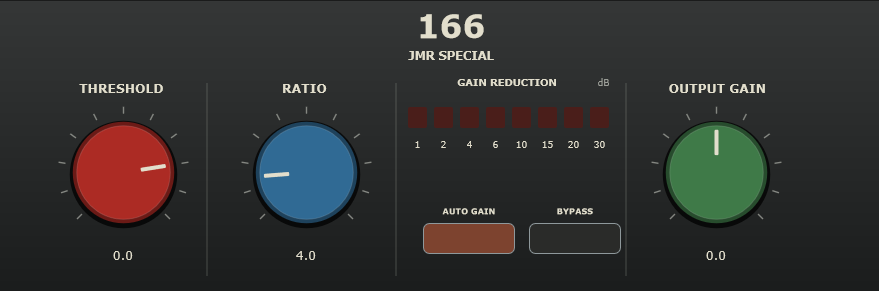
JMR 166 Special — a focused, single-channel compression interface.
Behind the Model
166 Special began with a physical dbx 166 dynamics processor. We captured and analyzed its compressor section through controlled electrical measurements, then compared the resulting digital model directly with the hardware using real recordings. The goal was to reproduce the measured compression behavior in a streamlined plugin—not to add functions we could not verify.
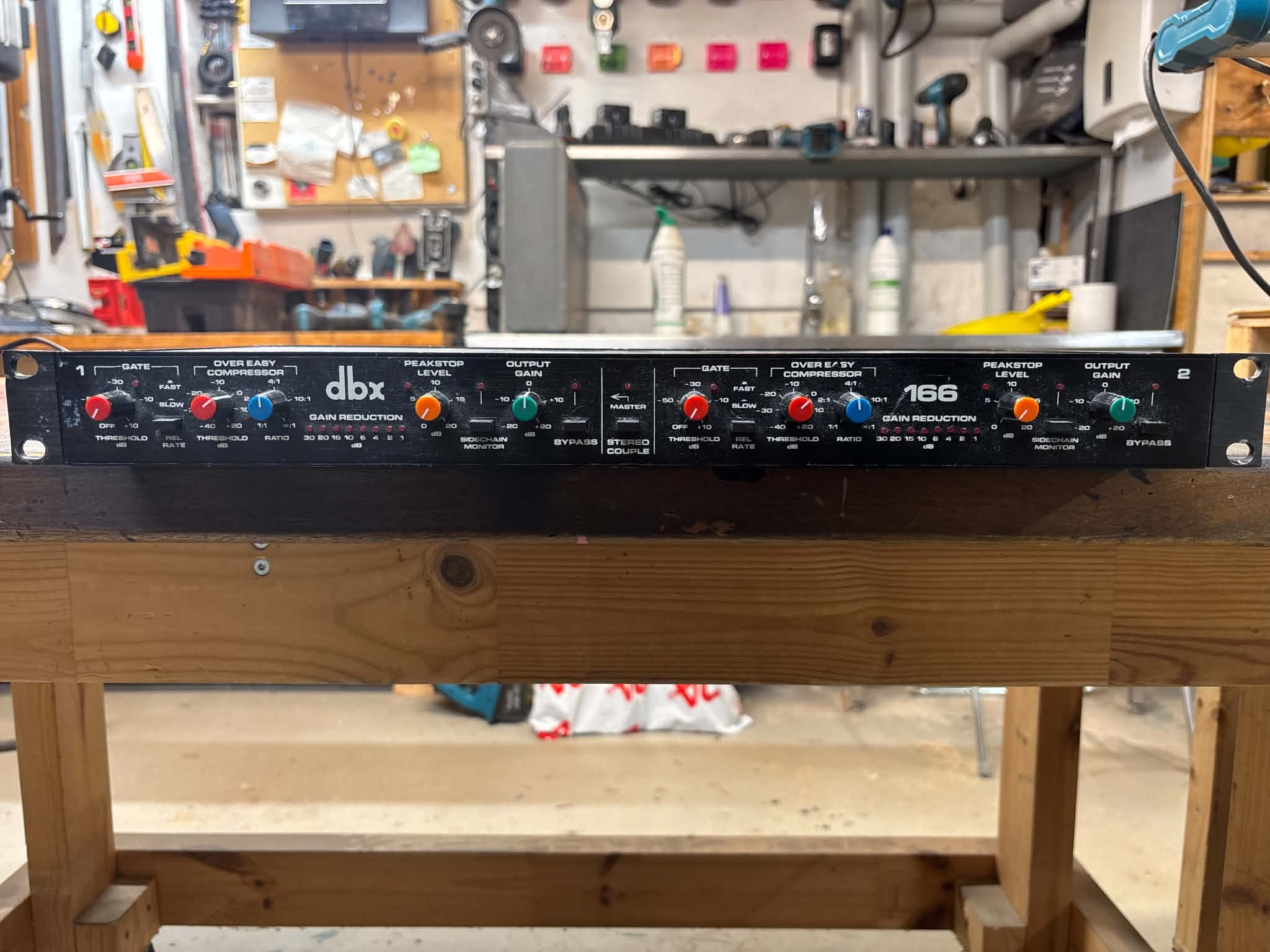
The physical dbx 166 used during development.
01 / The hardware reference
Our reference was a dual-channel dbx 166 dynamics processor. The plugin presents the documented compressor section as a single-channel tool, with threshold, ratio, output gain, gain-reduction indication and convenient software auto gain.
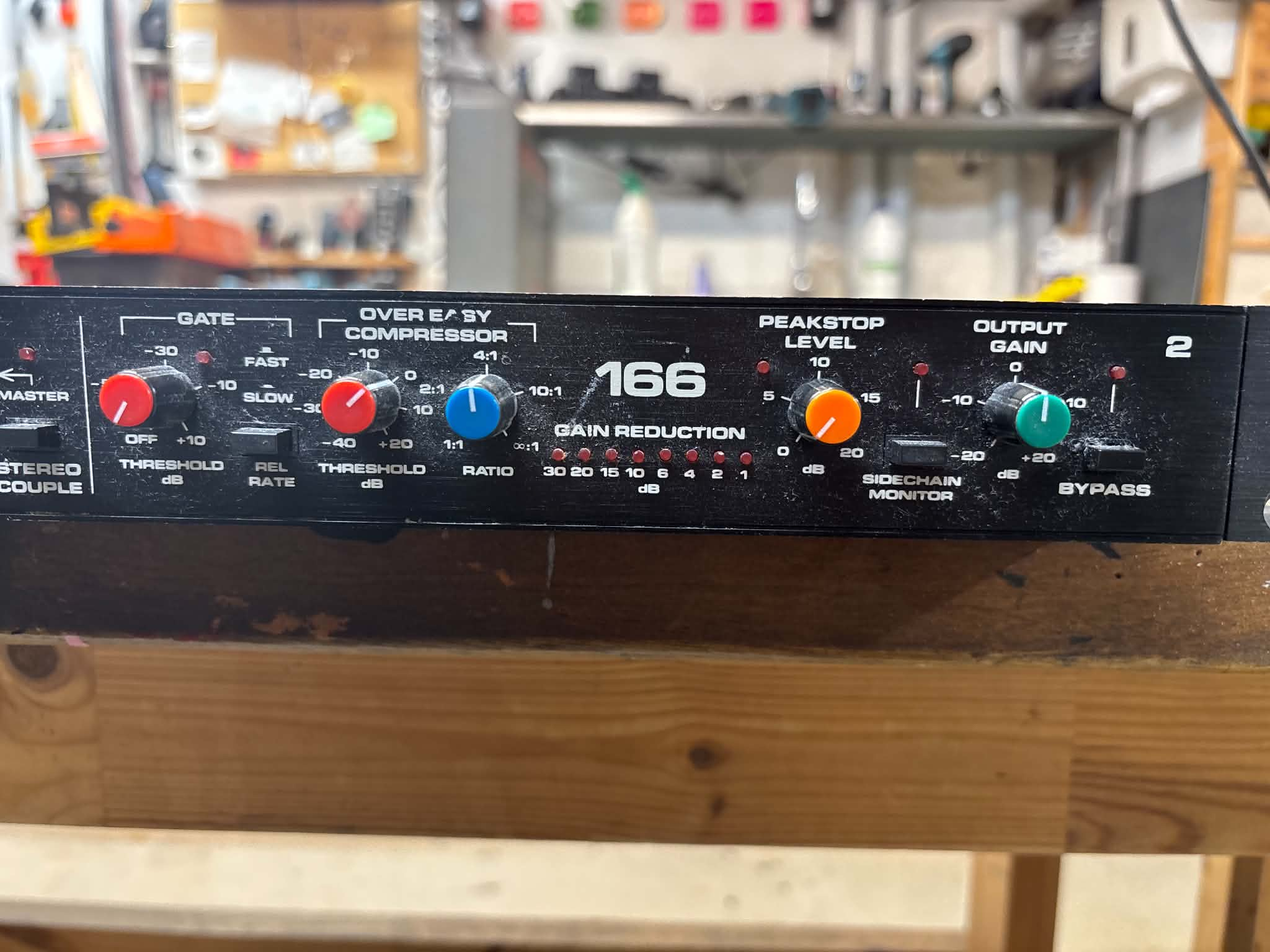
A closer view of the original hardware controls.
02 / Original Signal Chain
We connected the processor directly to the audio interface for controlled measurements, avoiding an additional microphone, amplifier or loudspeaker in the test path.
Source: Behringer UMC1820 — Line Output
Hardware input: dbx 166 Input
Hardware output: dbx 166 Output
Capture: Behringer UMC1820 — Line Input
03 / Measurement & Validation
Exact level transitions. Every ratio setting. The compressor was recorded with controlled sine-wave signals switching directly from −50 dB to −6 dB and back to −50 dB. These were abrupt changes, not a gradual level sweep. We used the transitions to examine gain-reduction onset and recovery over time.
We recorded and analyzed every available ratio setting of the reference hardware. The resulting measurements informed the digital model. We then compared the physical processor and plugin with real audio recordings to assess their behavior on practical material.
04 / Inside the Model — Engineering Notes
Not just one fixed release time
During the abrupt −6 dB → −50 dB transition, the hardware showed a faster initial reduction in gain reduction followed by a slower final recovery. This two-stage character was an important finding in our measurements.
We explored a two-stage release approach in the digital model to better reflect that behavior. This describes the measured recovery and our modeling approach; it is not a claim that the original dbx circuit contains exactly two fixed release time constants.
We are deliberately not publishing exact internal release constants or a numerical accuracy claim without a verified measurement set supporting those figures.
05 / Scope & limitations
The physical reference failed before we could fully investigate its gate and PeakStop limiter sections. Those functions are not modeled or included in JMR 166 Special.
Auto Gain is a software convenience feature, not a modeled control from the original hardware.
06 / Hardware A/B audio — future documentation
We plan to repair the original dbx 166 and record matched hardware-versus-plugin listening examples. No comparison audio is published yet; examples will only appear here once they have been captured and checked.
dbx is referenced solely to identify the independently measured original hardware. JMR Sound is not affiliated with or endorsed by dbx or its trademark owners.